

This is custom heading element

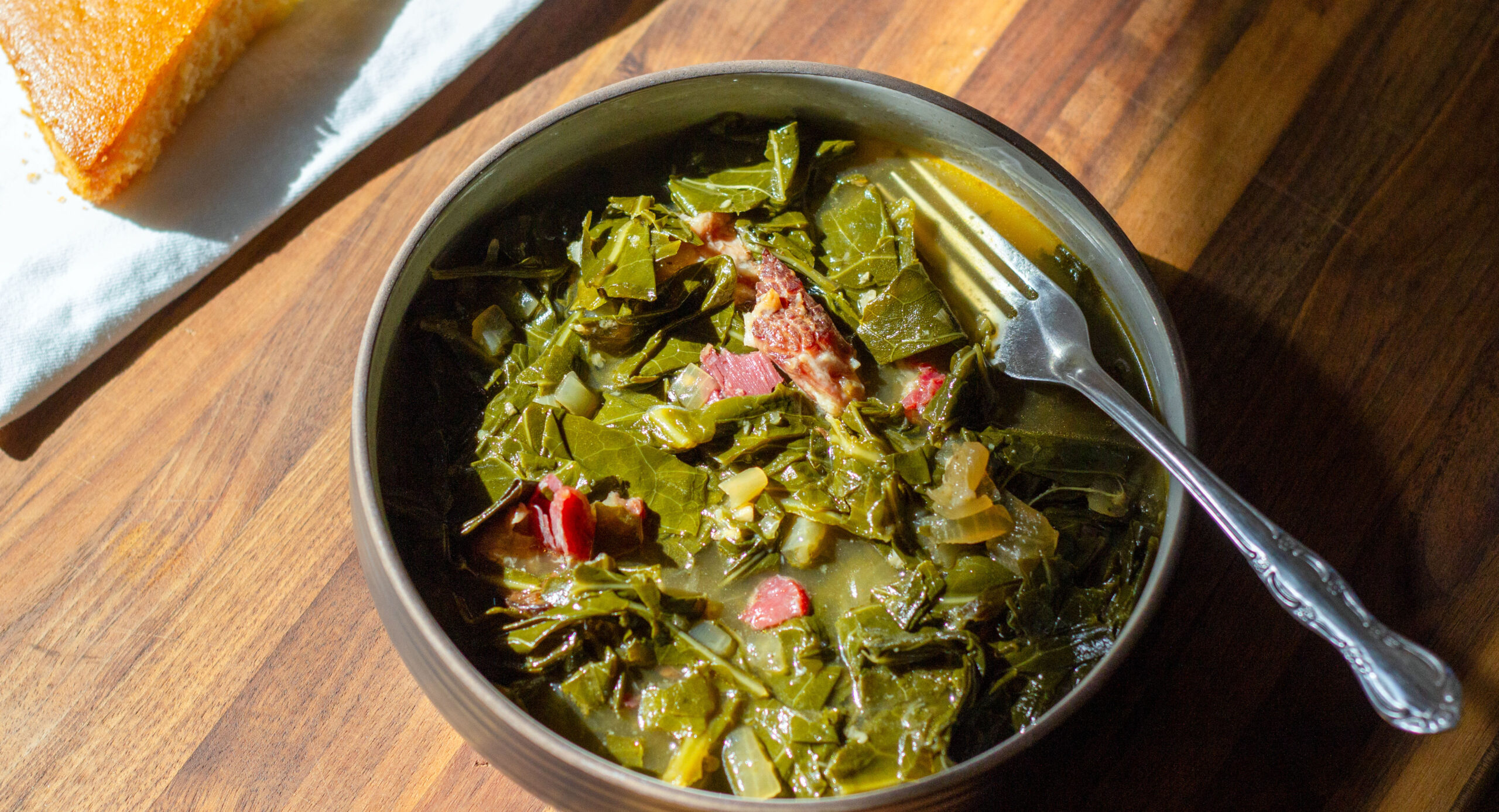
Slowly simmered with ham, collard greens are a staple of Southern cuisine. DANIELLE ROSE PHOTOS
Grandma’s collards a Florida legacy
Collard greens have earned their place as one of the most dependable winter crops in Florida. They’re sturdy, unfussy, and remarkably productive from late fall through spring. In my garden, they’re the standout crop each season. It’s always one issue after another trying to grow tomatoes, but my collards never let me down.
Collards thrive during our cold snaps, and, unlike more delicate leafy greens, they don’t bolt at the first warm spell. Once established, a few plants can supply fresh leaves for a family for months. They grow well in most soil, ask for little more than consistent moisture, and respond generously to regular harvesting. The more leaves you pick, the more they give.

Whether you grow your own or buy them from a market, collards need to be washed well. They tend to be gritty, and a quick rinse just won’t cut it. I like to fill up the sink with cold water and swish them around. When I lift them out, I check to see if there’s any sand in the bottom of the sink. If there is, I drain the water and repeat the process until no grit is left behind. Once clean, I dry them on a kitchen towel. I only remove the tough end stems, but if you prefer, you can fold them in half and tear off the entire middle stem.
Every year I try new recipes for collards, but the overwhelming favorite is always the classic: Southern-style smoky collard greens. It’s the only way my grandma ever cooked them. I think it resonates because it’s familiar and simple. It starts with a giant pile of fresh collards and a smoked ham hock. The greens simmer slowly, absorbing the depth and richness of the smoked meat while still holding their structure and earthy flavor. A splash of vinegar at the end brightens the flavor and balances the smokiness. A dash of hot sauce never hurts, either.
As winter settles in, it’s time for a big pot of smoky collard greens. They’re deeply satisfying on their own, with a slab of cornbread. Of course, they also pair well with barbecue and black-eyed peas. Collards are just one more reminder of the incredible abundance of Florida.

Collard greens harvested in winter are tender and mild.
Smoky Collard Greens
Ingredients
2 tablespoons bacon fat, oil or butter
1 large Vidalia onion, diced
1-2 cloves garlic, smashed
1 smoked ham hock or smoked turkey leg
2 pounds collard greens
4 cups chicken stock
Kosher salt
1 teaspoon smoked paprika
Pinch of red pepper flakes
Black pepper
2-3 tablespoons apple cider vinegar
Hot sauce [to taste]
Instructions
To clean the collards, submerge the leaves in cold water and swish around. Drain and repeat until no grit remains.
Prepare them by removing the thickest stems [or fold in half and remove the entire center stem]. Stack and roughly chop the leaves into 3-inch strips.
Heat a large pot or Dutch oven on medium-high heat. Add bacon fat to the pot along with the onions and sauté until translucent. Add the garlic and stir.
Deglaze the pan with chicken broth. Add the ham hock.
Begin to layer in the collard greens, in batches. Season with a pinch of salt, smoked paprika, red pepper flakes and black pepper.
Bring to a simmer. Cover and reduce the heat.
Stir every 15 minutes or so and adjust the heat to a low simmer. Taste and add salt, and other seasonings, to your taste. Cook for at least 30 minutes, or as long as it takes for the collards to be as tender as you like. Stir in the apple cider vinegar at the end of cooking, along with hot sauce, to taste.
Serve hot, straight from the pot.
See the original article in print publication
Danielle Rose
Danielle Rose is a seventh-generation Florida gardener and fisherwoman and descendant of the prodigious Summerlin family. A graduate of the University of Florida, she loves gathering friends and family around the table for homegrown food.